Why SMEs Cannot Afford to Ignore AI Anymore?
There is a common misconception that AI is “for big companies.” That narrative is fading fast. According to the McKinsey Global Survey, 55% of businesses across all sizes have adopted AI in at least one function, and adoption rates among small businesses are climbing rapidly year over year.
What changed? Three things came together at the right time:
• Cloud-based AI tools made enterprise-grade technology available on a subscription basis.
• No-code and low-code platforms removed the need for technical expertise.
• AI pricing dropped dramatically, with many powerful tools offering free tiers or affordable monthly plans.
The result is a remarkable opportunity for SMEs. You can now compete on capabilities that were previously out of reach. The businesses that recognize this early will build advantages that are very hard for competitors to close later.
Use Case 1: AI-Powered Customer Support

The Problem Every Growing SME Recognizes
You are scaling up. Inquiries are coming in faster. Your small support team is stretched thin. Customers are waiting longer. And every hour of delay is a potential churn risk. Hiring more staff helps but it also means more payroll, more training, and more management overhead.
This is exactly where AI steps in, and it does so brilliantly.
Intelligent Chatbots and Virtual Assistants
AI-powered customer service platforms like Intercom, Zendesk AI, and Freshdesk can handle 60 to 80% of routine customer inquiries automatically. We are talking about questions like “Where is my order?” or “How do I reset my password?” or “What is your return policy?” These questions are repetitive, time-consuming for your team, and perfectly suited for automation.
What This Means for Your Bottom Line
Let us do a quick back-of-the-napkin calculation. If your team handles 500 support tickets per month and each takes 15 minutes to resolve, that is 125 hours of labor. At an average customer service wage, that is a significant monthly cost. If AI handles 65% of those tickets automatically, you are saving over 80 hours per month. That is time your team can redirect to sales, upselling, or strategy.
Use Case 2: AI-Driven Marketing Personalization

The Gap Between Generic and Personal
Here is something we all know instinctively as consumers: we respond to things that feel relevant to us. A generic email blast gets ignored. A message that speaks to a specific need? That one gets clicked.
For most SMEs, true personalization at scale has historically been out of reach. You simply do not have the team or the tools to send individually tailored communications to hundreds or thousands of customers. AI changes that equation completely.
How AI Personalizes Marketing at Scale
AI marketing tools analyze customer behavior, purchase history, browsing data, and engagement patterns to automatically segment your audience and deliver the right message to the right person at the right time. Platforms like Klaviyo, HubSpot, Mailchimp with AI features, and ActiveCampaign all offer this capability at SME-friendly price points.
AI can also personalize your website experience in real time. Tools like Dynamic Yield and Optimizely can show different homepage content, product recommendations, or CTAs based on who is visiting. This sounds complex, but many of these platforms are designed for non-technical users.
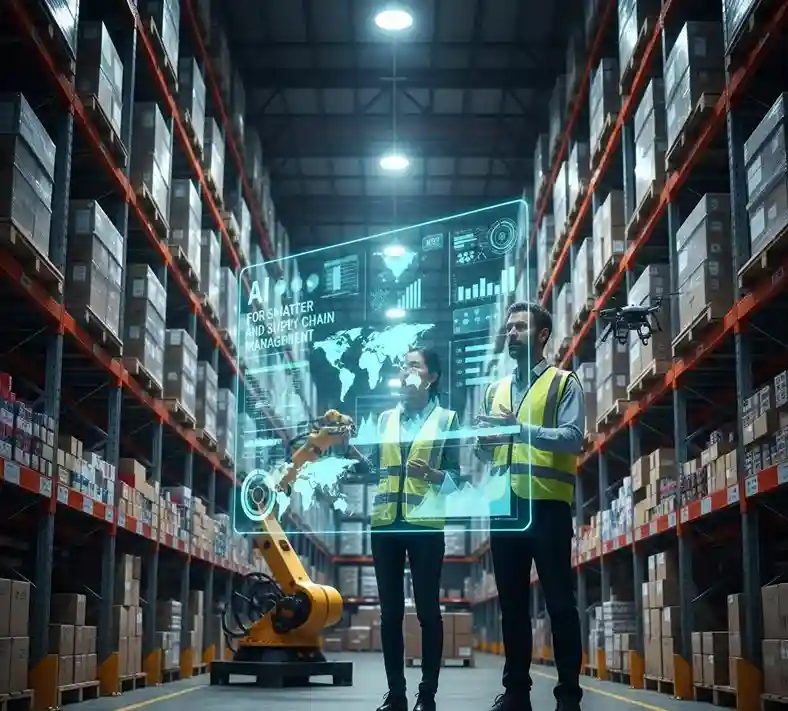
Use Case 3: AI for Smarter Inventory and Supply Chain Management
The Hidden Cost of Getting Stock Levels Wrong
Overstock ties up cash and creates waste. Understock means lost sales, frustrated customers, and emergency reordering at premium prices. Finding that sweet spot manually is genuinely hard, especially when you are juggling seasonality, supplier lead times, and fluctuating demand.
This is one of the highest-impact areas where AI can transform an SME’s profitability, and it is one that often goes underappreciated until businesses see their first AI-generated forecast in action.
Demand Forecasting with AI
AI-powered inventory tools analyze historical sales data, seasonal trends, external factors like local events or weather patterns, and even social media signals to predict future demand with far greater accuracy than manual methods or basic spreadsheets.
Platforms like Inventory Planner, Cin7, and Brightpearl integrate directly with platforms like Shopify, WooCommerce, and QuickBooks to pull your data and generate actionable forecasts automatically.
Beyond Forecasting: AI in Supplier Negotiations
Some newer AI tools are also helping SMEs analyze supplier performance, flag delivery risks, and even recommend alternative suppliers when disruptions are likely. This was previously only feasible for large enterprises with dedicated procurement teams. Now a small operations manager can get the same analytical edge.
Use Case 4: AI-Assisted Hiring and HR Management

Why Hiring Is Still One of the Biggest Pain Points for SMEs
Ask any small business owner what keeps them up at night and hiring is almost always near the top of the list. Finding the right people is expensive, time-consuming, and notoriously hit-or-miss. And when you are running a lean operation, a bad hire costs you far more than just the salary.
Here is some encouraging news: AI is genuinely transforming the hiring process in ways that level the playing field between SMEs and large corporations with HR departments.
AI Recruitment Tools That Actually Work
AI-powered recruitment tools like Workable, Lever, and Breezy HR use machine learning to screen resumes against your job description, rank candidates by relevance, and even flag potential red flags. This cuts initial screening time from hours to minutes.
Beyond screening, AI tools can also:
• Generate customized interview question sets based on the role and candidate profile.
• Send automated follow-up communications to candidates at each stage, preserving your employer brand.
• Analyze patterns from your previous hires to identify the traits that predict success in your specific culture.
• Flag potential bias in job descriptions, helping you attract a broader, more diverse talent pool.
AI for Ongoing HR: Beyond Just Hiring
AI tools are also helping SMEs with employee engagement surveys, automated onboarding workflows, leave management, and even early identification of disengagement signals. Tools like Leapsome, Culture Amp, and BambooHR offer AI-powered insights that help small teams punch above their weight in employee experience.
Use Case 5: AI-Powered Financial Insights and Cash Flow Management

The Cash Flow Challenge That Never Seems to Go Away
Cash flow is the lifeblood of any SME. You probably already know this. And yet, managing it well is something that even experienced business owners struggle with. Late receivables, unexpected expenses, seasonal dips, and poor visibility into future cash positions can catch even well-run businesses off guard.
AI is now bringing CFO-level financial intelligence to businesses that cannot afford a CFO.
What AI Financial Tools Can Do for You
Modern AI-powered accounting and finance tools go far beyond bookkeeping. Platforms like Xero with AI insights, QuickBooks Advanced, and Fathom analyze your income and expense patterns to generate predictive cash flow forecasts, flag unusual transactions, identify late payment risks, and recommend timing for major expenditures.
That statistic is sobering. But it also represents an opportunity. If cash flow problems are that common and that consequential, then any tool that gives you better visibility and predictive capability is genuinely protecting your business.
AI for Invoice Management and Accounts Receivable
Tools like Chaser, YoozPay, and Xero’s AI-powered chasing feature use machine learning to predict which invoices are at risk of being paid late and automatically send personalized payment reminder sequences. Studies show that automated, AI-timed payment reminders reduce average days sales outstanding (DSO) by 15 to 25%. That improvement in collections velocity directly improves your cash position without any additional cost.
Let us bring it all together. Here are the five concrete AI use cases that are already delivering real profits for SMEs just like yours:
| Use Case | Benefit |
| AI-Powered Customer Support | Faster responses, lower support costs, higher CSAT scores |
| AI-Driven Marketing Personalization | Higher conversion rates, stronger customer loyalty, more revenue per email |
| AI Inventory and Supply Chain | Reduced overstock, fewer stockouts, improved working capital |
| AI-Assisted Hiring and HR | Faster time-to-hire, better quality candidates, reduced recruitment cost |
| AI Financial Insights | Improved cash flow visibility, fewer payment delays, smarter financial decisions |
Your AI Advantage Is Waiting
The businesses that are winning right now are not necessarily bigger or better resourced than you. They are simply moving faster. They are testing, learning, and compounding small AI advantages into significant competitive leads.
You do not need to do everything at once. Pick one use case from this list, the one that addresses your most pressing current challenge, and get started this week. Run a pilot for 30 days. Measure the results. Then build from there.
AI is not the future of business. It is the present. And the good news is that the front door is wide open for SMEs who are ready to walk through it.
Take the first step toward smarter growth today and discover how AI can start delivering measurable results for your business.