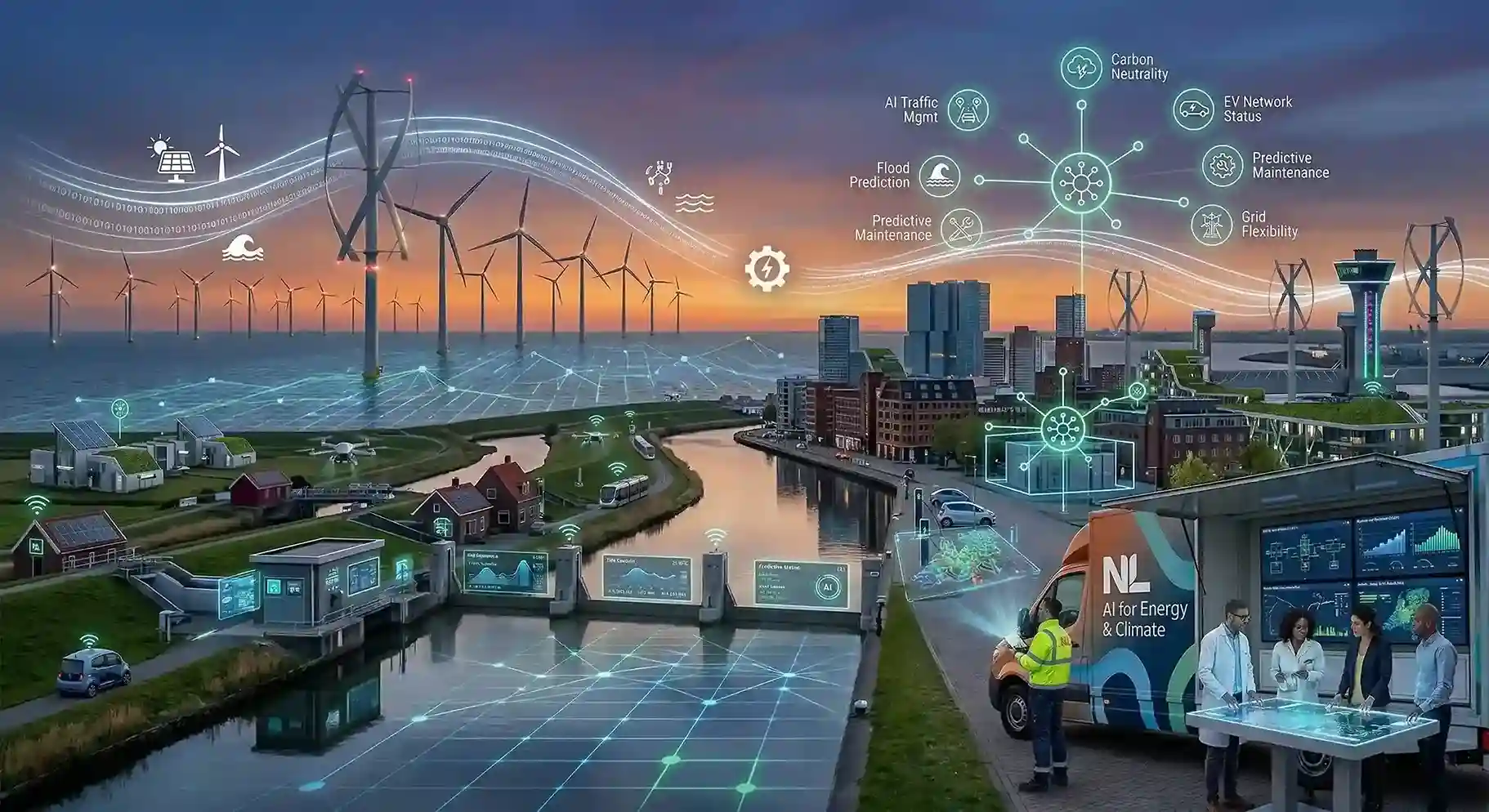
What if the future of clean energy and climate resilience is already being built today? In the Netherlands, a quiet revolution is unfolding where artificial intelligence is transforming how energy is produced, distributed, and managed. While much of the world debates climate solutions, this small European nation is actively using AI to design smarter, cleaner, and more resilient energy systems.
This innovation is deeply connected to the Netherlands’ long history of battling the forces of nature. For centuries, the Dutch have built an extraordinary system of dikes, canals, and pumps to protect their land from rising waters. Today, that same spirit of engineering and problem-solving is driving a new mission: using advanced technologies like AI to build smarter energy systems and strengthen the nation’s response to climate change.
The Energy Transition Challenge: Big Problem, Bigger Stakes
Before we get to the exciting AI-powered solutions, it helps to understand the scale of the challenge. The Netherlands, like much of Europe, has committed to ambitious climate targets, including dramatically cutting greenhouse gas emissions and transitioning to renewable energy sources like wind and solar.
But here is the catch: renewable energy is intermittent. The wind does not always blow. The sun does not always shine. And the Dutch grid, like grids everywhere, was built for a world of predictable, centralized fossil fuel power plants, not the chaotic, distributed nature of clean energy.
Add to that a growing population, a booming electric vehicle market, and an explosion of energy-hungry data centers (yes, the Netherlands hosts a significant share of Europe’s digital infrastructure), and you have a grid management challenge of staggering complexity.
This is exactly where AI enters the picture.
Smart Grids and AI: The Brain Behind the Power
The Dutch grid operator TenneT, responsible for the high-voltage electricity grid in the Netherlands and large parts of Germany, has been at the forefront of integrating AI into grid operations. TenneT manages one of Europe’s most complex cross-border grids, and the complexity only grows as more renewables come online.
AI systems are now being deployed to predict energy demand and supply fluctuations with remarkable accuracy, often looking hours and even days ahead. These predictions allow grid operators to make smarter decisions about when to fire up backup power sources, when to ramp down production, and how to balance load across the network.
Machine learning algorithms continuously analyze weather data, historical consumption patterns, industrial schedules, and even social events (a major football match, for example, can cause a predictable spike in energy demand) to keep the grid stable and efficient.
During periods of high solar energy production on sunny summer days, the Dutch grid can actually experience an oversupply situation. Too much electricity flowing into a grid can be just as destabilizing as too little. AI-powered demand response systems now communicate directly with large industrial consumers, incentivizing them to shift their energy-intensive operations to these high-supply windows. The result? Less wasted clean energy, lower costs for businesses, and a more stable grid for everyone.
Wind Energy: Where AI is Doing the Heavy Lifting
The Netherlands is famously windy. The country has a long offshore wind tradition, and today it operates some of the largest offshore wind farms in the world, including the massive Hollandse Kust Noord and Hollandse Kust West projects in the North Sea.
Managing offshore wind turbines is a logistical and engineering challenge. These machines operate in one of the harshest environments on earth, far from shore, battered by salt spray and powerful storms. Maintenance is expensive and dangerous. Unexpected failures are costly.
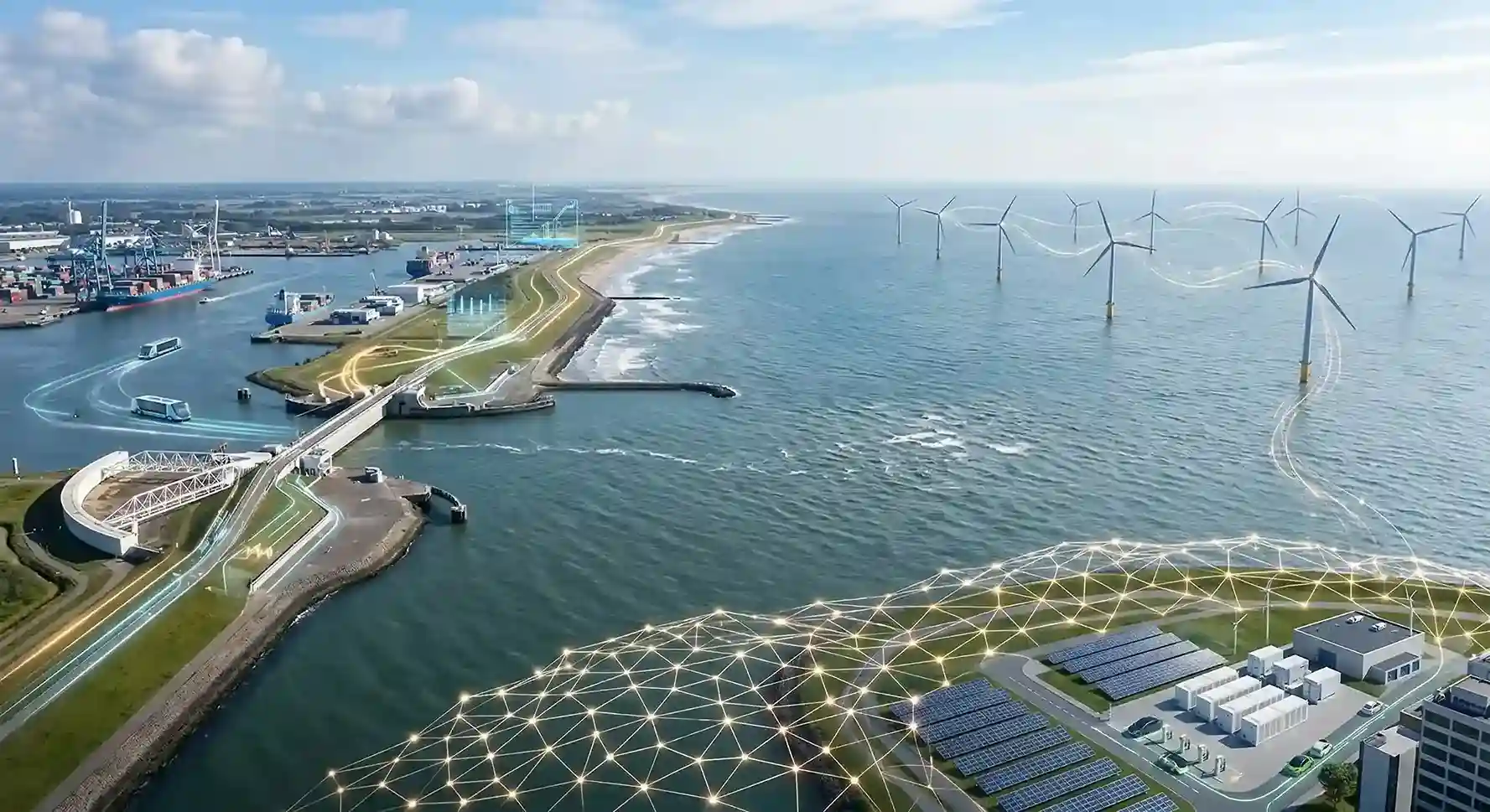
Enter predictive maintenance powered by AI. Sensors embedded throughout modern wind turbines continuously stream data on vibration levels, temperature, rotational speed, and dozens of other variables. AI models trained on vast datasets of historical turbine performance can detect the early warning signs of mechanical failure weeks or even months before a breakdown occurs.
This transforms maintenance from a reactive, expensive scramble into a planned, efficient process. Technicians go offshore only when needed, with exactly the right parts and expertise. Turbine uptime improves. Costs drop. And those turbines keep generating clean power for Dutch homes and businesses.
Climate Adaptation: AI as a Guardian Against Rising Waters
For a country where flooding is not a distant risk but an existential one, climate adaptation is not optional. It is survival. And AI is becoming an indispensable tool in the Dutch climate adaptation toolkit.
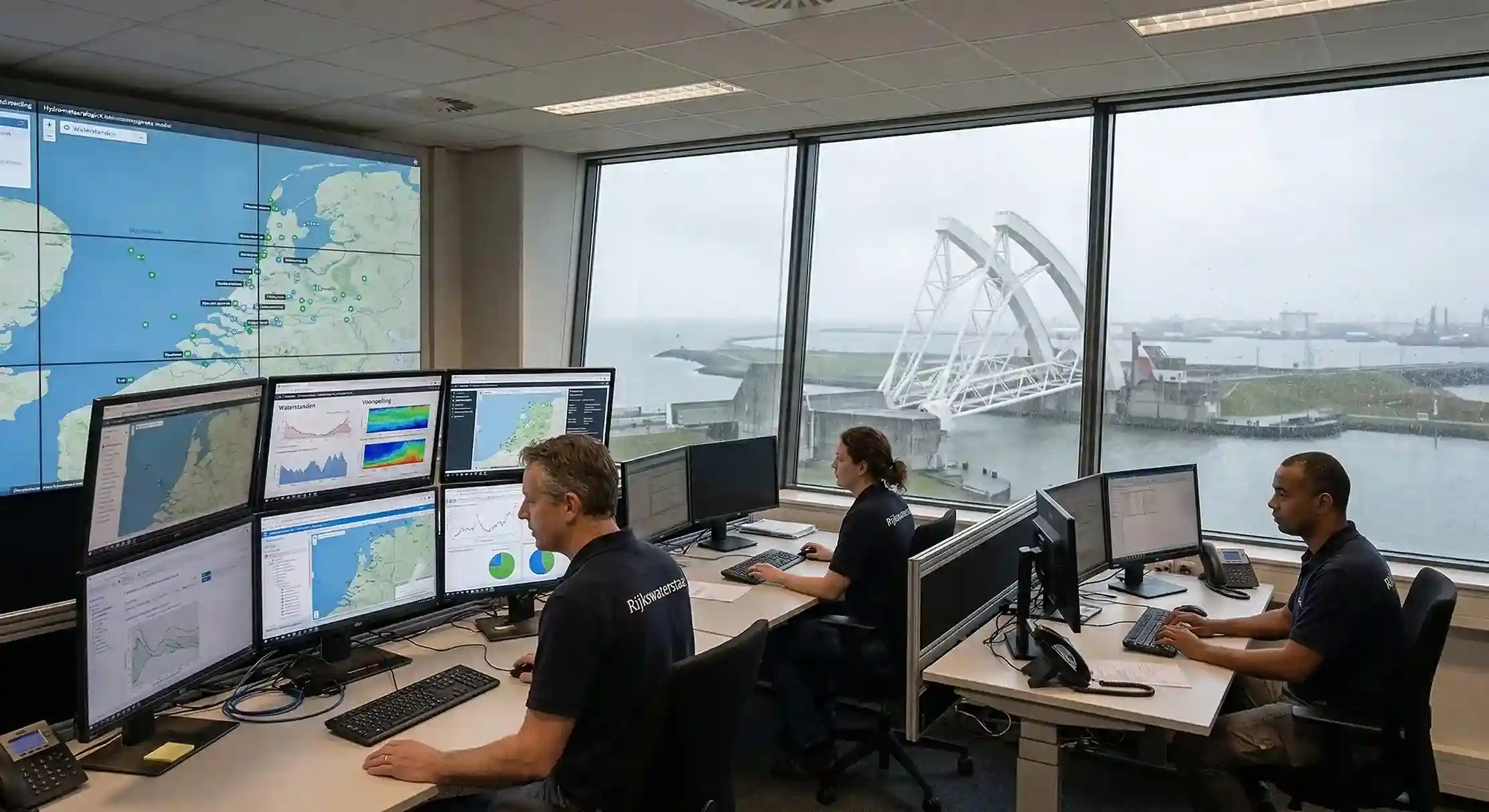
The Rijkswaterstaat, the Dutch government body responsible for water management and infrastructure, uses sophisticated AI-driven flood forecasting and water management systems. These systems integrate data from thousands of sensors across rivers, coastal areas, and the North Sea, combined with real-time weather data and climate projections, to model flood risks and optimize the operation of the country’s water management infrastructure.
The famous Maeslantkering, one of the world’s largest movable flood barriers located at the entrance to the Rotterdam waterway, uses automated decision systems (with AI components) to determine when to close. Given that a single wrong decision could either leave the city unprotected during a storm or unnecessarily disrupt a major shipping route, the precision of these systems is critical.
Beyond flood barriers, AI is being used to model the long-term impacts of sea level rise on coastal communities, helping urban planners and policymakers make smarter decisions about where to build, how to reinforce existing infrastructure, and which areas may need managed retreat in the coming decades.
Urban Energy Hubs: Amsterdam and Rotterdam Lead the Way
It would be impossible to talk about the Dutch AI and energy revolution without mentioning its two great cities. Amsterdam and Rotterdam are not waiting for national policy to catch up. They are building the smart, sustainable cities of the future, right now.
Amsterdam’s Smart City Initiative
Amsterdam has been a pioneer in smart city technology, using AI and data analytics to optimize everything from traffic flow to public lighting. In the energy space, the city has experimented with smart neighborhood energy systems where AI manages the flow of energy between solar panels, battery storage, electric vehicles, and the broader grid at the neighborhood level. These so-called energy communities allow residents to collectively generate, store, and share clean energy in ways that benefit everyone.
Rotterdam’s Climate-Resilient Port
Rotterdam is home to Europe’s largest port, and the port authority has been investing heavily in AI to decarbonize its operations. AI systems optimize the routing and scheduling of vessels to minimize fuel consumption, predict maintenance needs for port equipment, and manage the transition to hydrogen and other green fuels. The port is also a living laboratory for climate adaptation, with AI tools helping model and prepare for the flooding and storm surge risks that climate change will intensify.
The Human Side: Jobs, Skills, and the Just Transition
A silent revolution is still a revolution, and revolutions bring disruption alongside opportunity. It would be naive to talk about AI in energy without acknowledging the very real concerns about job displacement and the need for a just transition for workers in traditional energy sectors.
The good news is that the Netherlands is actively grappling with this challenge. Dutch universities and vocational training institutions are ramping up programs in data science, AI, renewable energy technology, and smart grid management. The country’s strong tradition of social partnership between government, business, and labor unions means that conversations about managing the workforce transition are happening proactively, rather than as an afterthought.
The energy sector of the future will need data scientists, AI engineers, turbine technicians skilled in digital diagnostics, grid operators comfortable with machine learning tools, and policy experts who understand both climate science and technology. These are good jobs, and the Netherlands is working hard to build the talent pipeline to fill them.
The Dutch Approach: What Makes It Work
So what is the secret sauce? Why is the Netherlands punching above its weight in this space? A few factors stand out:
• A culture of pragmatic innovation. The Dutch have always solved problems by building things. Their engineering tradition naturally extends to the digital domain.
• Strong public-private collaboration. Dutch AI and energy projects typically involve partnerships between government bodies, universities, and private companies. This ecosystem approach accelerates innovation and deployment.
• An open data culture. Dutch grid operators, water managers, and research institutions share data more freely than many of their international counterparts, enabling better AI models and faster learning.
• A willingness to experiment at scale. The Netherlands has been willing to run large-scale pilots and experiments with new technologies, treating the whole country as a kind of innovation lab.
• Geographic necessity. When you live below sea level, climate change is not an abstract threat. That urgency drives action.
What the World Can Learn from the Netherlands
The Dutch experience offers lessons that travel well beyond the North Sea coast.
First, AI in energy is not a futuristic luxury. It is a practical necessity for managing the complexity of modern, renewables-heavy grids. Any country serious about the energy transition needs to be investing in these capabilities now.
Second, climate adaptation and climate mitigation are two sides of the same coin. The Netherlands demonstrates that AI tools can simultaneously help reduce emissions (through smarter energy management) and build resilience against the climate impacts that are already locked in.
Third, the transition requires investment in people, not just technology. The most sophisticated AI system in the world is only as effective as the humans who design, deploy, and oversee it. Workforce development is not a nice-to-have. It is mission-critical.
Fourth, collaboration beats competition when the stakes are this high. The open, partnership-driven model of Dutch innovation is one that policymakers and business leaders everywhere should be studying closely.
The Revolution Will Not Be Televised, But It Will Be Digitized
The Netherlands’ silent revolution is not making front-page headlines every day. It is happening in the hum of offshore wind turbines, the smooth operation of flood barriers, the optimized flow of electricity through urban neighborhoods, and the continuous learning of algorithms that are quietly making the energy system smarter, cleaner, and more resilient.
It is a revolution powered not by drama, but by data. Not by grand gestures, but by thousands of small, intelligent optimizations adding up to something transformative.
And here is the inspiring part: this is only the beginning. The AI tools being deployed today are early iterations. As computing power grows, as datasets expand, and as algorithms become more sophisticated, the potential for AI to accelerate the energy transition and climate adaptation will only increase.
The Dutch are not just building a better energy system for themselves. They are writing a manual for how humanity can navigate one of the greatest challenges it has ever faced.
Start building smarter, more sustainable solutions today.